
Call for FPGAworld contributions
The following types of contributions are welcome:
- Technical Presentations – Academia, Students, Hackers and Independent:
Presentations covering applications, research, theses, student projects and independent technical developments. Marketing is not permitted. No fixed deadline and no cost. Submissions are accepted as long as presentation slots are available. Submit a Presentation - Product Presentations: Commercial and marketing content is welcome. Bookings are accepted as long as presentation slots are available. Book a Product Presentation
- Organize a Conference Track:
Take responsibility for a complete conference track, including its theme and presentations. Topics may include VUnit, FPGA boards or specific technologies.
Companies are also welcome to organize dedicated tracks. The number of available track organizer slots is limited. More information about Booking Track Presentation (Three Product Presentations
- Keynote Submission: No deadline, marketing is not permitted and availability depends on slot availability. Contact lennart.lindh@fpgaworld.com
- Book an Exhibition Space: Bookings are accepted as long as exhibition spaces are available. Contact mia.lindh@fpgaworld.com
- Sponsorship Opportunities: FPGAworld sponsors are welcome! Contact lennart.lindh@fpgaworld.com
The figure below shows the approximate annual planning schedule for FPGAworld.

Conditions for Participation:
By contributing to FPGAworld, you agree that:
- Your presentation title, abstract and presenter information may be published in the conference program and archive.
- Photographs taken during the conference may be published on the FPGAworld website.
- Additional presentation materials may be submitted voluntarily for publication in the FPGAworld archive.
- Presentation slots are normally 20, 25 or 30 minutes, including questions, depending on the conference schedule.
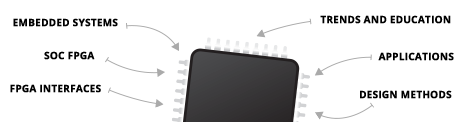
Contributions are welcome in the following areas. Other relevant FPGA-related topics will also be considered:
DESIGN METHODS – models and practices
- Project methodology, models and practices
- System Specifications, Models, and Methodologies
- System Modeling, Simulation, and Validation
- System Design, Synthesis, and Optimization
- Hardware/Software co-design
- IP Integration – models and practices
- Security, Reliability and Fault Tolerance
- Formal methods, Verification and validation
- FPGA to ASIC design flow
- Analog and digital ASIC design
- TOOLS/INSTRUMENTS
New Design Tools and Languages
- High-Level Synthesis
- Synthesis, Compilers, C-to-Hardware
- Tool integration, Co-simulation, Hardware-in-the-loop testing
- Design, modeling, implementation, verification, and validation
- Instrumentation, monitoring, testing, debugging, etc
- Logic Analyser, Oscilloscope, etc
- HW/SW IP COMPONENTS
IP component presentation
- Interface/protocol design: supporting modularity
- New IP components for platforms and applications
- Advanced IP components
- ASIC IP components
- FPGA/ASIC DEVICE
SoC FPGA
- Mixed analog and FPGA
- Components, Packaging & Manufacturing
Prototyping
- FPGA boards
- FPGA and analog prototyping
- Modeling etc
EMBEDDED SOC SYSTEMS
- Embedded Software Architectures
- Real-Time Operating Systems
- Compilers and Software Synthesis for Embedded Systems
- HW/SW architectures
- Networked and Dependable Systems
- Model-Based Design and Verification for Embedded Systems
EMBEDDED SOC PLATFORM ARCHITECTURES
- Embedded System Platforms
- Reconfigurable architectures
- Coarse-grained Reconfigurable Architectures
- Low power architectures
APPLICATIONS AND CASE STUDIES
- Case studies from industry
- Analog/Digital/Software component presentations
- Prototyping
- Student work and projects
SURVEYS, TRENDS, AND EDUCATION
- History and surveys
- Tutorials – Educations